Chinese Measure Words List
There are many unique features of the Chinese language. One of the features is the Chinese measure words, which are used to measure words to count nouns. As you can see, the typical structure is “number + measure word + noun.” Since there are no changes in the noun, no matter it’s singular or plural, the Chinese use the number to specify the quantity. And the use of the measure words is often based on the noun’s shape, characteristic, container, or common use. Many Chinese learners, especially the beginners, often use “个” as their preference. It is indeed a general measure word, but not for everything. Here is a list for you to learn more about the use of the very commonly used Chinese measure words.
| Chinese | Pinyin | Usage | Example |
|---|---|---|---|
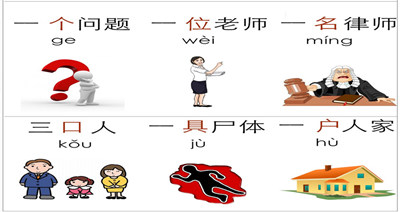
| 个 | gè | individual person or object | 一个人 (yī gè rén) “a person” or 三个苹果 (sān gè píngguǒ) “three apples” |
| 位 | wèi | person | 三位老师 (sān wèi lǎoshī) “three teachers” |
| 名 | míng | person, professional | 一名医生 (yī míng yīshēng) “a doctor” |
| 口 | kǒu | dependent | 六口家眷 (liù kǒu jiājuàn) “six dependents” |
| 具 | jù | corpse | 一具尸体 (yījù shītǐ) “a corpse” |
| 户 | hù | household | 十戶人家 (shí hù rénjiā) “ten households” |
| 只 | zhī | animal | 一只鸟 (yī zhī niǎo) “a bird” |
| 头 | tóu | livestock | 一头牛 (yī tóu niú) “a cow” |
| 匹 | pǐ | horse | 一匹马 (yī pǐ mǎ) “a horse” |
| 条 | tiáo | fish, snakes | 一条鱼 (yītiáo yú) “a fish” |
| 棵 | kē | tree | 一棵树 (yī kē shù) “a tree” |
| 株 | zhū | plant, flower still in the ground | 一株花 (yī zhū huā) “a flower” |
| 朵 | duǒ | flower bulb or stem | 一朵玫瑰 (yī duǒ méiguī) “a stem of rose” |
| 把 | bǎ | handful | 一把花 (yī bǎ huā) “a bunch of flowers” |
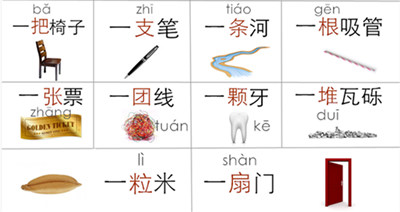
| 支 | zhī | long (and straight) | 一支笔 (yī zhī bǐ) “a pen” |
| 条 | tiáo | long (and winding) | 一条河 (yī tiáo hé) “a river” |
| 根 | gēn | long (and thin) | 一根头发 (yī gēn tóufǎ) “a strand of hair” |
| 张 | zhāng | flat | 一张票 (yī zhāng piào) “a ticket” |
| 团 | tuán | pile | 一团乱 (yī tuán luàn) “a mess (lit. a pile of junk)” |
| 堆 | duī | big pile | 一堆瓦砾 (yī duī wǎlì) “a pile of rubble” |
| 颗 | kē | small, compact | 一颗珠 (yī kē zhū) “a perl” |
| 粒 | lì | tiny | 一粒药 (yī lì yào) “a pill” |
| 扇 | shàn | leaf, something that turns on a hinge | 一扇门(yī shàn mén) “a door” |
| 包 | bāo | a pack | 一包面纸 (yī bāo miàn zhǐ) “a pack of tissues” |
| 卷 | juǎn | a roll | 一卷卫生纸 (yī juǎn wèishēngzhǐ) “a roll of toilet paper” |
| 封 | fēng | an envelope | 一封信 (yī fēng xìn) “a letter” |
| 桶 | tǒng | tube, bucket | 一桶油漆 (yī tǒng yóuqī) “a bucket of paint” |
| 盒 | hé | box | 一盒巧克力 (yī hé qiǎokèlì) “a box of chocolates” |
| 束 | shù | boquet | 一束花 (yī shù huā) “a boquet of flowers” |
| 本 | běn | book | 一本书 (yī běn shū) “a book” |
| 份 | fèn | newspaper | 一份报纸 (yī fèn bàozhǐ) “a newspaper” |
| 件 | jiàn | incident | 一件事 (yī jiàn shì) “an incident, a circumstance, a thing” |
| 节 | jié | event, episode | 一节课 (yī jié kè) “one class” from a series or a course |
| 门 | mén | a subject or series of classes | 你在修几门课n (nǐ zài xiū jǐ mén kè) “How many subjects are you taking?” |
| 次 | cì | time, occurrence | 三次 (sān cì) “three times” |
| 场 | chǎng | large event | 一场大雨 (yī chǎng dàyǔ) “a heavy rain” |
| 段 | duàn | a period of time | 一段往事 (yī duàn wáng shì) “a past event” |
| 阵 | zhèn | sudden, passing event | 一阵雨 (yī zhèn yǔ) “a quick rain shower” |
| 刻 | kè | a moment | 一刻疯狂 (yīkè fēngkuáng) “a moment of madness” |
| 番 | fān | a long period of time, or an activity that requires significant effort | 一番好气象 (yī fān hǎo qìxiàng) “a stretch of good weather” |
| 席 | xí | banquet | 一席宴会 (yīxí yànhuì) “a banquet” |
| 趟 | tàng | a trip | 一趟旅行 (yī tàng lǚxíng) “a tour” |
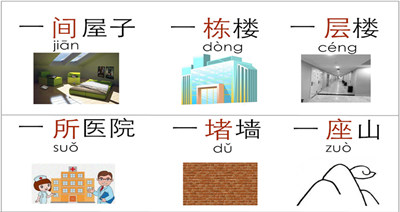
| 间 | jiān | room, house | 一间屋子 (yī jiān wūzi) “a room” |
| 栋 | dòng | tall building | 一栋大楼 (yī dòng dàlóu) “a tall building” |
| 层 | céng | floor | 五层大楼 (wǔ céng dàlóu) “a five story building”, literally “five floors of building” |
| 堵 | dǔ | wall | 一堵墙 (yī dǔ qiáng) “a wall” |
| 面 | miàn | wall | 一面墙 (yīmiàn qiáng) “a wall” |
| 所 | suǒ | multi building complex | 一所医院 (yī suǒ yīyuàn) “a hospital” |
| 场 | chǎng | field, open public space | 一场宴会 (yī chǎng yànhuì) “a party” |
| 家 | jiā | place of work | 一家公司 (yī jiā gōngsī) “a company” |
| 座 | zuò | large structure | 一座桥 (yī zuò qiáo) “a bridge” |
| 份 | fèn | portion | 一份面 (yī fèn miàn) “an order of noodles” |
| 片 | piàn | piece | 一片饼干 (yīpiàn bǐnggān) “a piece of cookie” |
| 块 | kuài | piece, slice | 一块蛋糕 (yīkuài dàngāo) “a slice of cake” |
| 口 | kǒu | sip, mouthful | 口 means “mouth”. |
| 道 | dào | dish | 一道名菜 (yīdào míng cài) “a famous dish” |
| 顿 | dùn | meal | 一顿早餐 (yī dùn zǎocān) “a breakfast” |
| 碗 | wǎn | bowl | 一碗饭 (yī wǎn fàn) “a bowl of (cooked) rice” |
| 盘 | pán | plate | 一盘水果 (yī pán shuǐguǒ) “a plate of fruit” |
| 笼 | lóng | bamboo drum | 一笼蒸饺(yī lóng zhēng jiǎo) “an order of steamed dumplings” |
| 滴 | dī | drop | 一滴水 (yī dīshuǐ) “a drop of water” |
| 杯 | bēi | cup | 一杯茶 (yī bēi chá) “a cup of tea” |
| 瓶 | píng | bottle | 一瓶啤酒 (yī píng píjiǔ) “a bottle of beer” |
| 壶 | hú | teapot | 一壶茶 (yī hú chá) “a pot of tea” |
| 罐 | guàn | can, jar | 一罐蜂蜜 (yī guàn fēngmì) “a jar of honey” |
| 股 | gǔ | whiff, smell | 一股香味 (yī gǔ xiāngwèi) “a pleasant aroma” |
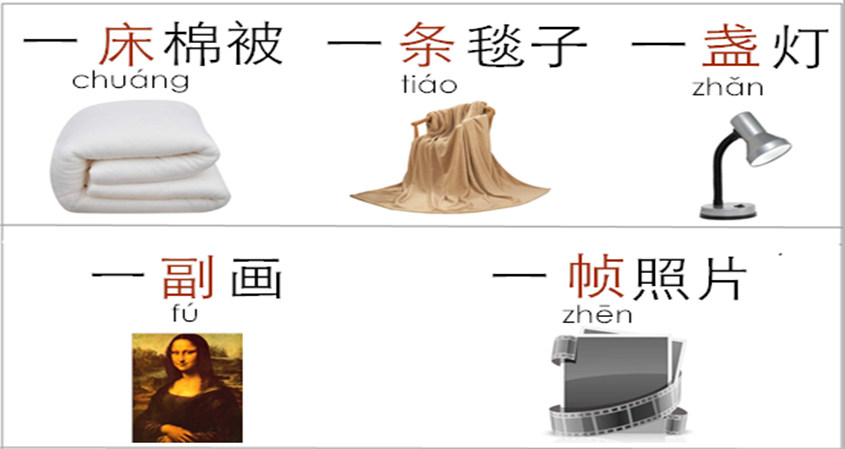
| 床 | chuáng | bedsheets | 一床棉被 (yī chuáng mián bèi) “a cotton blanket” |
| 条 | tiáo | towel, tablecloth | 一条毯子 (yī tiáo tǎnzi) “a blanket” |
| 盏 | zhǎn | lamp | 一盏台灯 (yī zhǎn táidēng) “a standing lamp” |
| 幅 | fú | painting or drawing | 一幅画 (yī fú huà) “a painting or drawing” |
| 帧 | zhēn | printed picture | 一帧照片 (yī zhēn zhàopiàn) “a photograph” |
| 件 | jiàn | article of clothing | 一件衣服 (yī jiàn yīfú) “an article of clothing” |
| 条 | tiáo | a long article of clothing | 一条领带 (yī tiáo lǐngdài) “a necktie” |
| 套 | tào | costume | 一套西装 (yī tào xīzhuāng) “a (Western) suit” |
| 顶 | dǐng | hat | 一顶帽子 (yī dǐng màozi) “a hat” |
| 双 | shuāng | pair of identical objects | 一双眼睛 (yī shuāng yǎnjīng) “pair of eyes” |
| 副 | fù | pair of complementary objects | 一副碗筷 (yī fù wǎn kuài) “bowl and chopsticks” |
| 对 | duì | matching pair | 一对夫妻 (yī duì fūqī) “a married couple”, literally “one pair husband-wife” ; 一对耳环 (yī duì ěrhuán) “a pair of earrings” |
| 些 | xiē | a few | 一些東西 (yī xiē dōngxī) “a few things” |
| 种 | zhǒng | a kind | 一种动物 (yī zhǒng dòngwù) “a type of animal” |
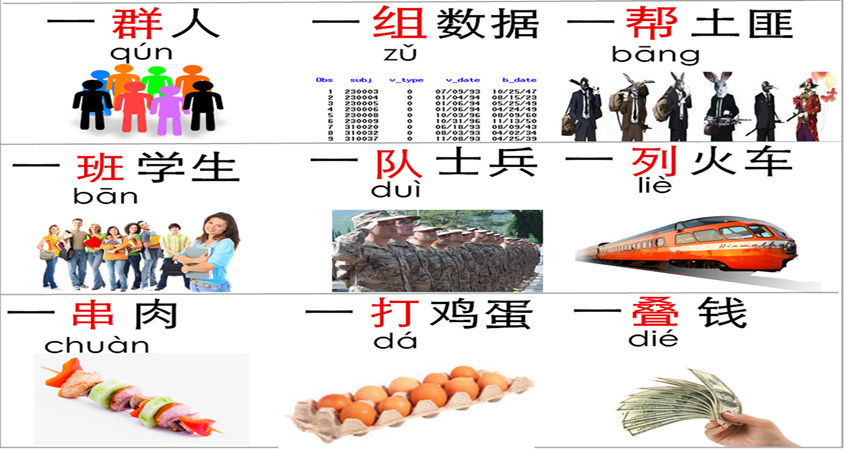
| 群 | qún | group, flock | 一群人 (yī qún rén) “a group of people” |
| 众 | zhòng | a crowd | 一众人 (yī zhòng rén) “a crowd of people” |
| 组 | zǔ | an organization | 一组用戶 (yī zǔ yòng hù) “consumers’ organization” |
| 帮 | bāng | a group or a band | 一帮贼 (yī bāng zéi) “a group of thieves” |
| 班 | bān | a class | 一班学生 (yī bān xuéshēng) “a class of students” |
| 排 | pái | a row, queue | 一排电杆 (yī pái diàn gān) “a row of electrical posts” |
| 队 | duì | a team, battalion | 一队军人 (yī duì jūnrén) “a battalion of soldiers” |
| 列 | liè | a chain, exhibited items | 一列火车 (yī liè huǒchē) “a train”, literally “a chain of cars” |
| 项 | xiàng | item in a list, headline | 一项标题 (yī xiàng biāotí) “a headline” |
| 串 | chuàn | skewer | 一串肉 (yī chuàn ròu) “a skewer of meat” |
| 打 | dá | dozen | 一打鸡蛋 (yī dá jīdàn) “a dozen eggs” |
| 叠 | dié | stack | 一叠箱 (yī dié xiāng) “a stack of boxes/containers” |
| 句 | jù | sentence | 一句话 (yī jù huà) “a spoken sentence” |
| 首 | shǒu | poem, song | 一首诗 (yī shǒu shī) “a poem” |
| 场 | chǎng | speech | 一场演说 (yī chǎng yǎnshuō) “a speech” |
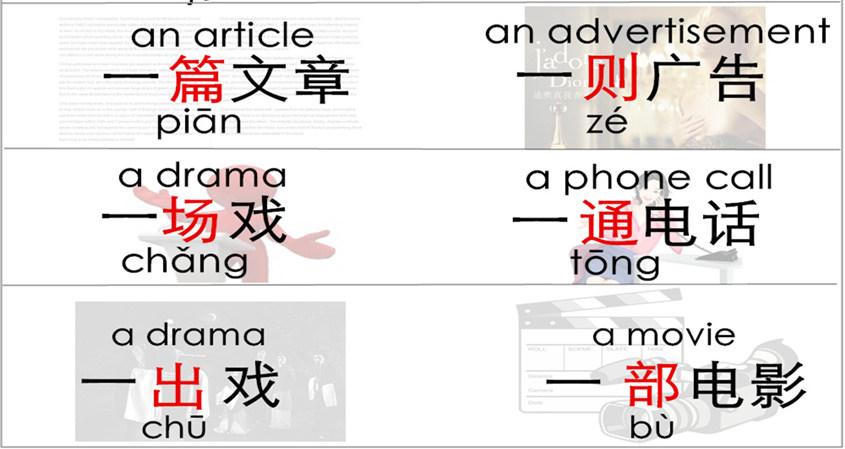
| 通 | tōng | phone call | 接到三通电话 (jiē dào sān tōng diànhuà) “receive three phone calls” |
| 篇 | piān | written piece | 一篇文章 (yī piān wénzhāng) “a newspaper article” |
| 则 | zé | AD, news report, story | 一则广告 (yī zé guǎnggào) “an AD” |
| 出 | chū | a play | 一出戏 (yī chū xì) “a play, a drama” |
| 部 | bù | a movie | 一部电影 (yī bù diànyǐng) “a movie” |
| 台 | tái | machine | 一台电视 (yī tái diànshì) “a television” |
| 辆 | liàng | road vehicle | 一辆汽车 (yī liàng qìchē) “a car” |
| 架 | jià | airplane | 一架飞机 (yī jià fēijī) “an airplane” |
| 艘 | sōu | ship | 一艘帆船 (yī sōu fānchuán) “a sailboat” |
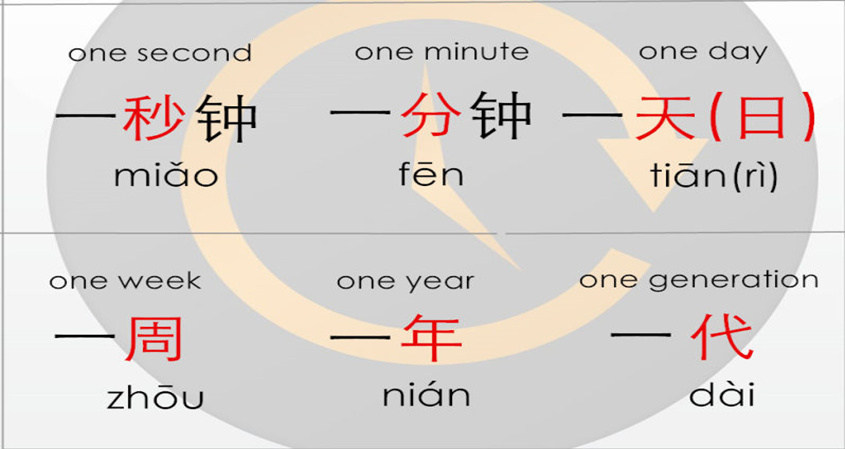
| 秒 | miǎo | second | 一秒钟 (yī miǎo zhōng) “one second” |
| 分 | fēn | minute | 一分钟 (yī fēnzhōng) “one minute” |
| 天 | tiān | day | 一天 (yī tiān) “one day” |
| 日 | rì | day | 一日 (yī rì) “one day” (used in literature and journalism) |
| 周 | zhōu | week | 一周 (yī zhōu) “one week” (used in literature and journalism) |
| 年 | nián | year | 一年 (yī nián) “one year” |
| 代 | dài | era, generation | 上一代 (shàng yīdài) “the previous generation” |
| 个 | gè | unit | 一个小时 (yīgè xiǎoshí) “one hour” |
| 斤 | jīn | unit of weight (~0.5 kg) | |
| 吨 | dūn | unit of weight (ton) | |
| 磅 | bàng | unit of weight (pound) | |
| 坪 | píng | unit of area (~0.6 m2) | |
| 块 | kuài | monetary unit (1 yuan) | |
| 毛 | máo | monetary unit (1/10 yuan) | |
| 笔 | bǐ | an unspecified amount of money | |
| 寸 | cùn | one inch (~1/30 m) | |
| 尺 | chǐ | one foot (~1/3 m) | |
| 里 | lǐ | unit of distance (~0.5 km) | |
| 升 | shēng | unit of volume (1 liter) | |
| 斗 | dòu | unit of volume (10 liter) | |
| 度 | dù | degree, level | |
The Beauty of Chinese Measure Words
One of the distinguishing features of the Chinese language is the importance and variety of measure words. It is true that measure words can be found in English as well: for example, when we say a strand of hair or a head of cattle, these are considered measure words. But for the most part, they are needed only to specify a collection of things, such as a flock of sheep, or an uncountable quantity, such as a gust of wind. But in Chinese, even single, countable objects require measure words, so that you cannot simply say “a flower”, “two people” or “five houses”.
The reason why measure words are so important in Chinese (and other Southeast Asian languages like Thai or Vietnamese) is because names of simple objects are typically words with one or two syllables, and so there are many homophone word pairs which are pronounced the same but having different meanings. The measure word serves as a kind of context that helps us to identify the meaning of the word that follows. Without measure words, the chance of misunderstanding what someone is saying becomes higher.
Chinese measure words can categorize the noun that follows it according to its function, shape, or some other property related to that noun. In some cases, more than one measure word may be used for the same noun, and our choice depends on which characteristic we wish to emphasize. With this in mind, “measure word” may not be the best label; we could also call them “specifiers”.
It’s difficult to count exactly how many there are — partly because most measure words also serve as other parts of speech. Chinese often uses simple object or action names to count other objects with similar properties. This construct can be observed in English as well, as with phrases like a slice of bread or a handful of salt. The Measure Word Dictionary, published by China Daily in Taiwan, contains over 420 measure words, and mentions that there are over 500 currently in use. (You can also check the measure words comparisons as well as more HSK4 related grammar tutorial videos at here.)
Since I am a big fan of learning by recognizing patterns, I compiled 115 frequently used measure words, grouped into sixteen logical categories. There are seven that appear in two categories each. There is one, 场/場 (chǎng), which appears in three, and another one, 条/條(tiáo), which appears in four. These categories will be presented in seven parts: